Buyer Guides
Set the Cleaning Regime Before You Pick a Wall Panel Finish
A finish that suits a hotel corridor may not survive the way a private study is looked after. Agree who cleans the wall first, then choose.
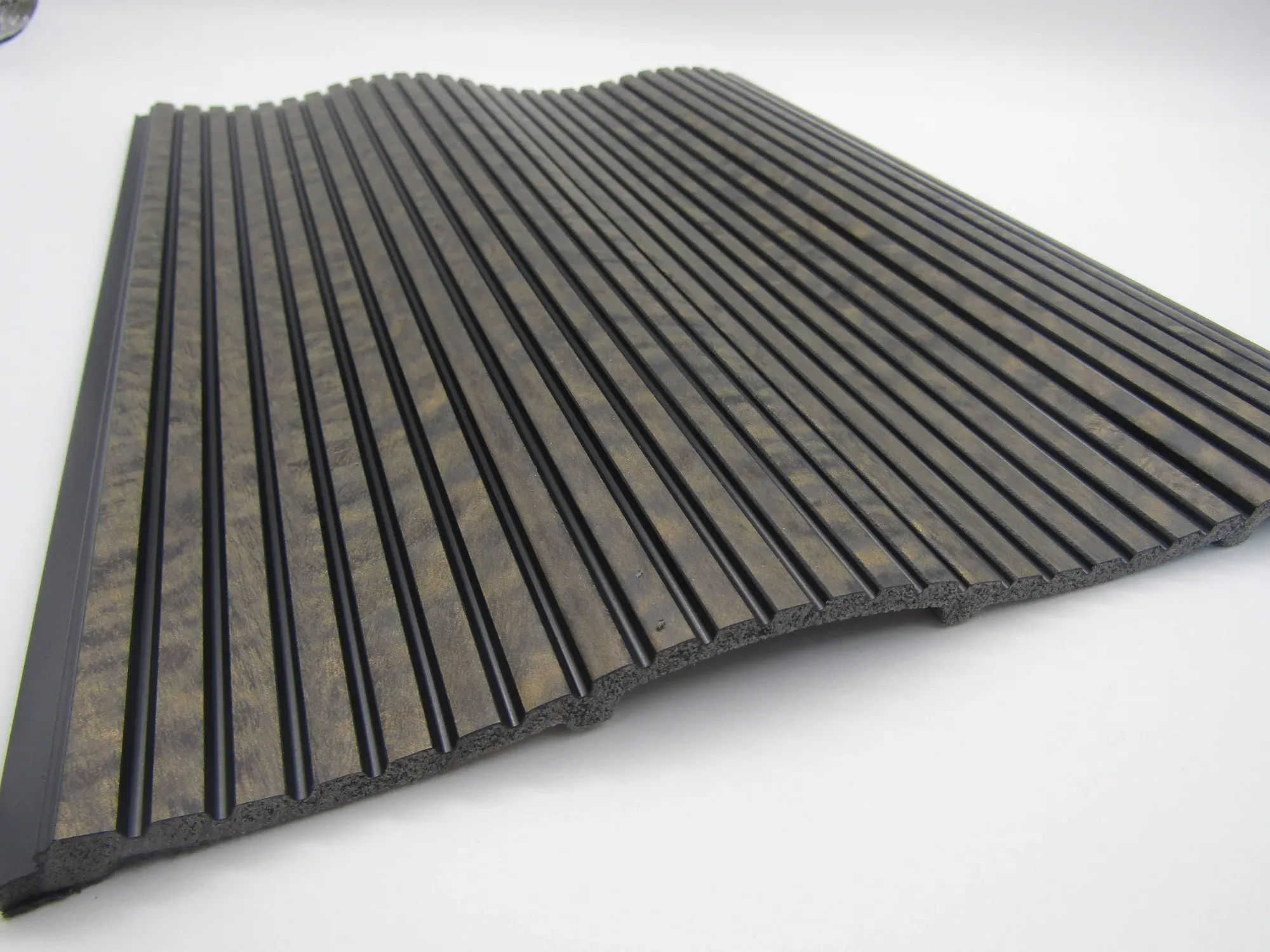
Most finish decisions are made from a sample board, on the basis of what looks right under the light in the meeting room. That test answers one question and leaves the expensive one open: what will this PS fluted wall look like after two years of the cleaning it is actually going to get.
Two rooms, two completely different walls
Compare a hotel corridor with a private study. The corridor is cleaned on a rota, probably by a contracted team, with equipment chosen for speed across a large area. The study is wiped now and then by the person who uses it, with whatever is in the cupboard. Same product family, two very different working lives.
If both projects are specified from the same sample and the same finish name, one of them is likely to be a compromise nobody wrote down. The finish conversation is really a maintenance conversation, and the maintenance conversation belongs in the brief.
Three questions before the sample board opens
Who cleans this wall. A contracted team, a facilities employee, or the occupant. The answer changes both the frequency and the constraints.
How often. Daily, weekly, or occasionally. Frequency is what turns a marginal finish choice into a visible one.
With what. This is the question most often skipped, and it is the one a supplier can actually answer. A generic answer about decorative wall panels is not an answer about the finish you selected.
A sample tells you what a finish looks like on the day you open the box. The cleaning schedule tells you what it will look like in year two.
What to ask the supplier, per order
Ask what the surface layer actually is. Whether a finish is a laminated film or a printed surface changes what cleaning method applies, and two panels sold under the same finish name can differ. It is a construction question, so it has to be asked per order rather than inferred from the catalogue.
Ask which cleaning method is compatible with that specific finish. Getting this in writing is what lets the maintenance contract and the specification agree with each other instead of contradicting each other six months in.
Where the finish sits in the specification
Finish is a separate field from geometry. The range is offered in eight surface finishes — wood and marble among them, alongside leather, metallic, concrete, gradient, Morandi and pastel — and the colour code identifies the exact surface you are ordering. None of this changes the profile, the width or the thickness you are ordering.
That separation is why finish is often settled late and revised late. It is the field a client reacts to when the samples finally arrive on site, and the one where a verbal agreement leaves nothing to check against. Two fields on the order — the family and the code — close that gap, and make a second phase matchable later.
What a mixed order does to the quotation
Adding a finish adds a line to the quotation. Cartons hold 8 to 38 pieces depending on the profile, and mixed-width and mixed-finish loads are an ordinary way to order in this category. Because the combination is what gets quoted, the finish list is worth settling at the same time as the quantities rather than in a later round.
If three finishes are going into one project across two profiles, that is a quotation input, not a later adjustment.
A brief the supplier can answer in one pass
Name the room, and say how many people pass through it. State who cleans it, how often, and with what. Give the finish and the colour code. Add the profile and the area. With those details the finish and the maintenance method can be confirmed together, which is the most reliable way to keep them consistent.
If a project has several room types with different cleaning arrangements, send the room list through our contact page and we will map the finish families and codes to each one.